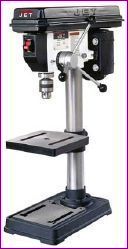
DRILL PRESS:
A tall upright machine useful for suddenly snatching flat metal bar stock out of your hands so that it smacks you in the chest and flings your soda across the room, splattering it against that freshly painted part you were drying.
WIRE WHEEL:
Cleans paint off bolts and then throws them somewhere under the workbench at the speed of light. Also removes fingerprint swirls and hard-earned guitar calluses in about the time it takes you to say, "?!*X"
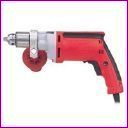
ELECTRIC HAND DRILL:
Normally used for spinning pop rivets in their holes until you die of old age.
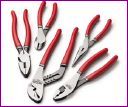
PLIERS:
A simple hand tool used to round off bolt heads.

HACKSAW:
One of a family of cutting tools built on the Ouija board principle. It transforms human energy into a crooked, unpredictable motion and the more you attempt to influence its course, the more dismal your future becomes.
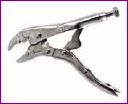
VISE-GRIPS:
Next generation Pliers. Also used to round off bolt heads. If nothing else is available, they can also be used to transfer intense welding heat to the palm of your hand.

OXYACETYLENE TORCH:
Used almost entirely for igniting various flammable objects in your shop. Also handy for igniting the grease inside the wheel hub you want the bearing race out of.
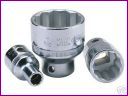
WHITWORTH SOCKETS:
Once used for working on older British cars and motorcycles, they are now used mainly for impersonating that 9/16 or 1/2 socket you've been searching for the last 15 minutes.
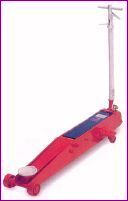
HYDRAULIC FLOOR JACK:
Used for lowering an automobile to the ground after you have installed your new disk brake pads, trapping the jack handle firmly under the bumper.
EIGHT-FOOT LONG DOUGLAS FIR 2 x 4:
Used for levering an automobile upward off a hydraulic jack handle.
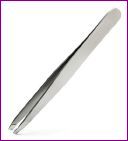
TWEEZERS:
A tool for removing Douglas Fir wood splinters.
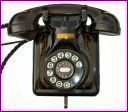
PHONE:
Tool for calling your neighbors to see if he has another hydraulic floor jack.
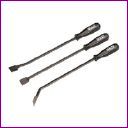
SNAP-ON GASKET SCRAPER:
Theoretically useful as a sandwich tool for spreading mayonnaise; used mainly for getting dog doo off your boot.

E-Z OUT BOLT AND STUD EXTRACTOR:
A tool ten times harder than any known drill bit that snaps off in bolt holes you couldn't use anyway.
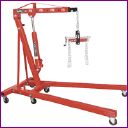
TWO-TON ENGINE HOIST:
A tool for testing the tensile strength of everything you forgot to disconnect.
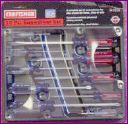
CRAFTSMAN 1/2 x 16-INCH SCREWDRIVER:
A large pry bar that inexplicably has an accurately machined screwdriver tip on the end opposite the handle.
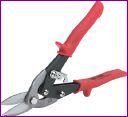
AVIATION METAL SNIPS:
See hacksaw.
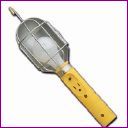
TROUBLE LIGHT:
The home mechanic's own tanning booth. Sometimes called a drop light, it is a good source of vitamin D, "the sunshine vitamin", which is not otherwise found under cars at night. Health benefits aside, its main purpose is to consume 40-watt light bulbs at about the same rate that 105-mm howitzer shells might be used during, say, the first few hours of the Battle of the Bulge. More often dark than light, its name is somewhat misleading.
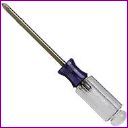
PHILLIPS SCREWDRIVER:
Normally used to stab the lids of old-style paper-and-tin oil cans and splash oil on your shirt; but can also be used, as the name implies, to strip out Phillips screw heads.
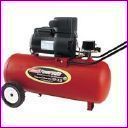
AIR COMPRESSOR:
A machine that converts energy produced in a coal-burning power plant 200 miles away into compressed air that travels by hose to a Chicago Pneumatic impact wrench that grips rusty bolts last over-tightened 58 years ago by someone at ERCO and neatly rounds off their heads.
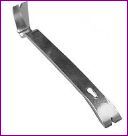
PRY BAR:
A tool used to crumple the metal surrounding that clip or bracket you needed to remove in order to replace a 50 cent part.
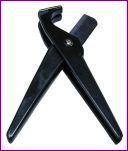
HOSE CUTTER:
A tool used to cut hoses too short.
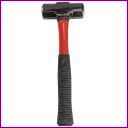
HAMMER:
Originally employed as a weapon of war, the hammer nowadays is used as a kind of divining rod to locate the really expensive parts nearest the object we are trying to hit.
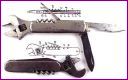
MECHANIC'S KNIFE:
Used to open and slice through the contents of cardboard cartons delivered to your front door; works particularly well on contents such as seats, vinyl records, liquids in plastic bottles, collector magazines, refund checks, rubber or plastic parts and fingers.

BLEEP TOOL:
Any handy tool that you grab and throw across the garage while yelling ~BLEEP~ at the top of your lungs. It is also the next tool that you will need.

EXPLETIVE:
A balm, usually applied verbally and in hindsight, which somehow eases those pains and indignities following our every deficiency in foresight.

CENTRE PUNCH:
Used to make holes in thin sheet metal and the work bench at the same time. Also used to simulate battle damage so your new bot looks meaner.
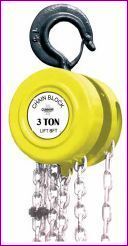
CHAIN HOIST:
Used for lifting heavy objects when all your friends have declared you insane and deserted you. Also used to test the strength of thin roof beams.
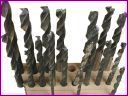
DRILL BITS:
These handy devices come in many sizes, each size has a specific use: